
Adventure Without Barriers
Who was still being left out?
Adventure can do more than create excitement.
It can build confidence, strengthen resilience, help people recognize their own power, and change how they approach difficult situations.
For Andrew Florence, everyone deserves the opportunity to experience that kind of growth.
Andrew founded the Miracle Heights Adventures program to provide adventure-based learning and counseling experiences for children, families, organizations, and community groups. Through ropes courses, zip lines, climbing walls, and team-building activities, participants are challenged to build trust, communicate, solve problems, and discover what they are capable of doing.
Andrew founded the Miracle Heights Adventures program to provide adventure-based learning and counseling experiences for children, families, organizations, and community groups. Through ropes courses, zip lines, climbing walls, and team-building activities, participants are challenged to build trust, communicate, solve problems, and discover what they are capable of doing.
Since opening to the public in June 2021, Miracle Heights Adventures has served more than 10,000 people through over 400 groups. Those groups have included schools, corporations, nonprofit organizations, government agencies, families, and visitors from across the country and around the world.
However, as the program continued growing, Andrew and his team began asking an important question.
Who was still being left out?
“I have spent much of my life paying attention to who is not included,” Andrew said. “If we are going to offer something to the public and it is not accessible to as many people as possible, then that is a problem we have to address.”
The Miracle Heights Adventures ropes course was renovated in 2018 and initially used to support children and families through adventure-based counseling.
Many of the children and families served by the program have experienced difficult circumstances. The ropes course provides a new environment where they can work through fear, practice communication, develop trust, and build confidence.
For Andrew, the activities are not the ultimate goal.
“The ropes course is a vehicle. It is a means to an end,” he said. “The important part is the transferability of what people learn during the experience.”
A child who is afraid to step onto a zip line may eventually find the courage to move forward. Later, when facing a challenge at home, at school, or within themselves, they can remember that they have done something difficult before.
The beginning may have been frightening, but the fear did not last forever.
They survived the hard moment.
They may have even enjoyed the experience enough to try again.
That memory can become evidence that they are capable of advocating for themselves, asking for support, and moving through difficult situations.
As Miracle Heights Adventures expanded its public programming, Andrew recognized that traditional ropes course equipment could create barriers for people with mobility differences and disabilities.
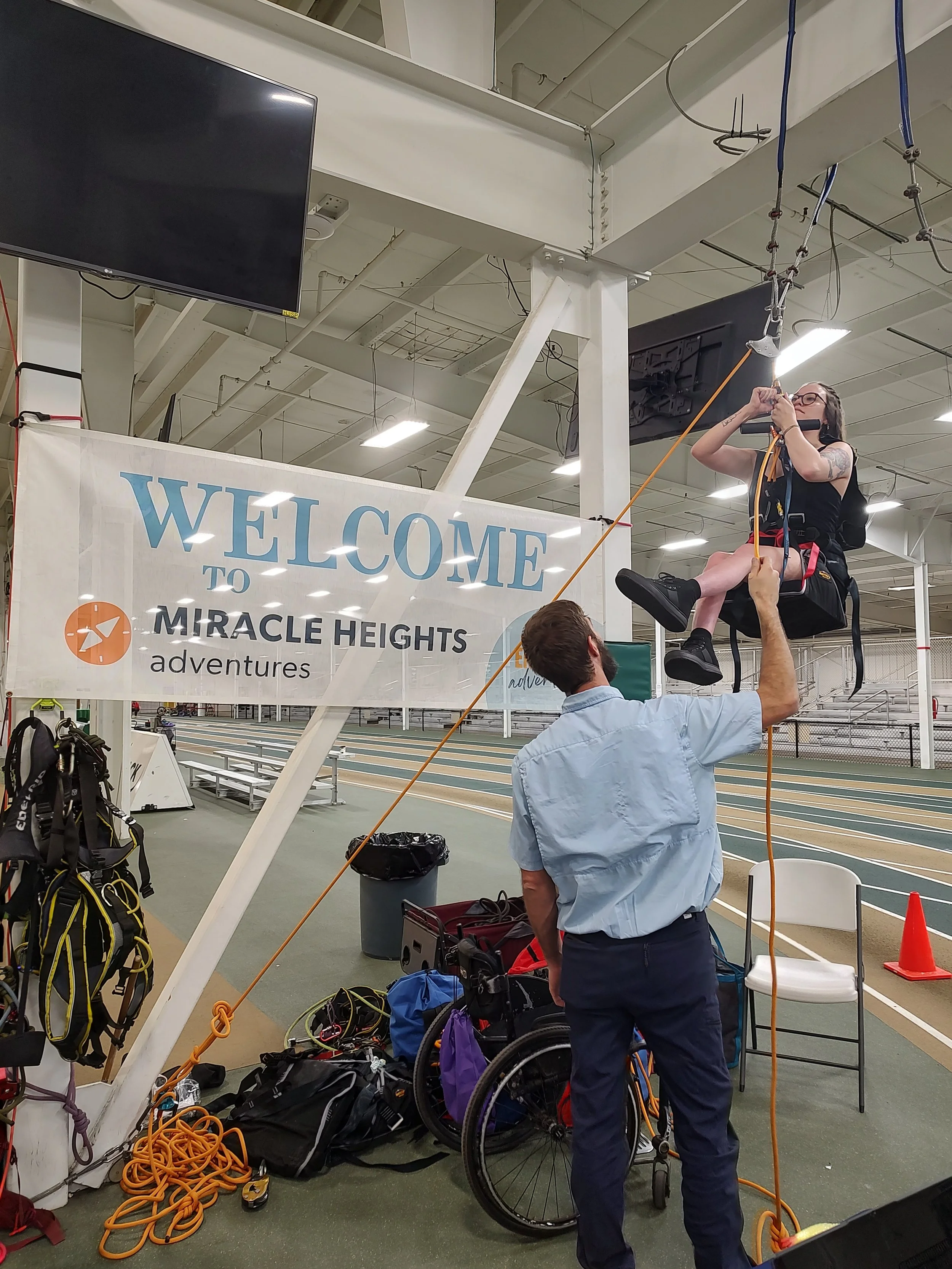
Specialized harnesses, belay systems, and other adaptive equipment can make many adventure activities more accessible. However, that equipment is expensive.
Specialized harnesses, belay systems, and other adaptive equipment can make many adventure activities more accessible. However, that equipment is expensive.
Let’s Choose Love became one of the first organizations to fund the program’s efforts to purchase adaptive equipment.
With that support, Miracle Heights Adventures was able to begin creating experiences that could be adjusted based on each participant’s abilities and needs.
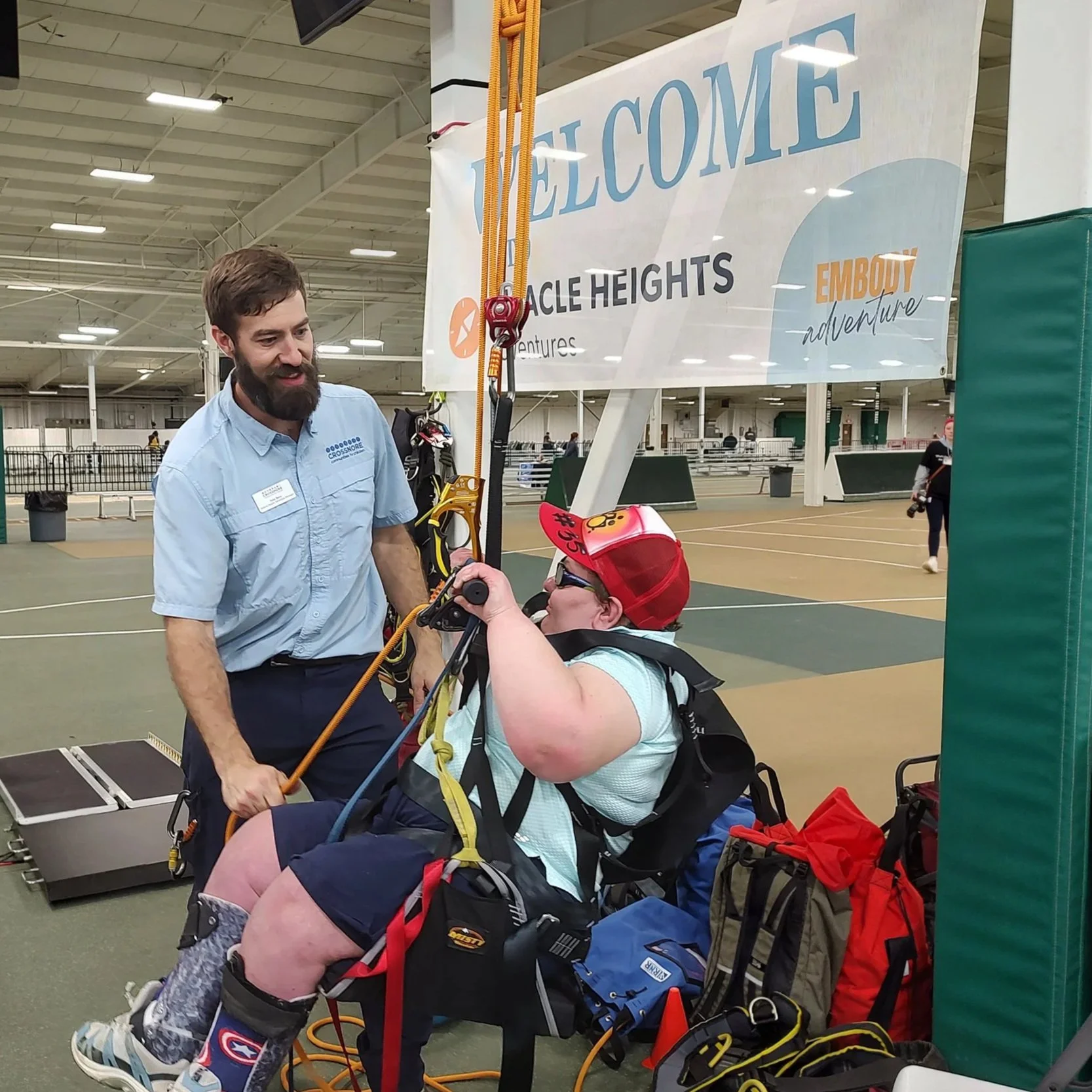
Some participants can use equipment that allows them to pull themselves upward. Others may participate through a team belay system, where staff members and teammates help support their movement.
The purpose is not to create a separate or lesser experience.
The purpose is to ensure that more people can participate with dignity, choice, and the support they need.
For Andrew, accessibility is not an act of charity. It is a responsibility.
Choosing to ignore the opportunity to include more people would go against the program’s values and the way its team wants to operate in the world.
Miracle Heights Adventures regularly participates in the Piedmont Adaptive Sports and Recreation Expo in Winston-Salem, North Carolina.
The event introduces attendees to adaptive recreation and sporting opportunities available throughout the community.
During the expo, Andrew’s team installs specialized ropes course equipment inside an indoor facility. Using an anchor attached to the building’s rafters, participants can experience adaptive harnesses, ropes, and belay systems firsthand.
Depending on a person’s mobility and physical needs, the equipment can be adjusted to allow them to pull themselves upward or receive support from a team.
The experience gives attendees an opportunity to see what may be possible for them on the Miracle Heights Adventures campus.
The program has also worked with parks and recreation departments, disability advocacy organizations, inclusive recreation programs, and organizations serving individuals who are blind or have other physical and intellectual disabilities.
During its previous fiscal year, Miracle Heights Adventures hosted five adaptive programs on its campus.
Once participants reach the ropes course and are secured in the appropriate equipment, many of the physical barriers can be addressed.
However, Andrew and his team discovered that accessibility must begin long before someone reaches the climbing wall.
The terrain between the parking area and the ropes course can be difficult for people who use wheelchairs or other mobility devices.
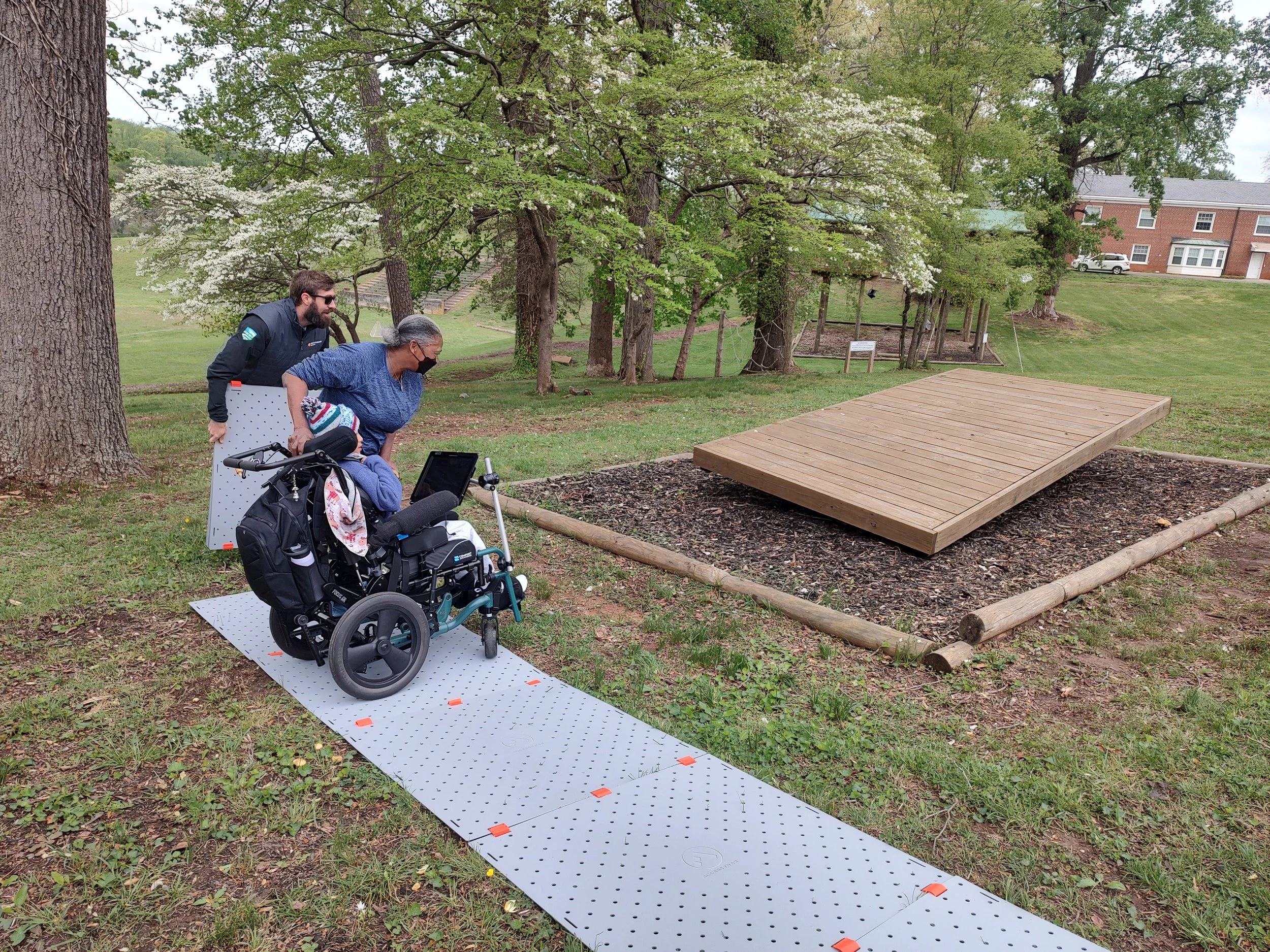
The program currently uses Access Trax, which are durable mats placed over uneven or soft ground to create a smoother pathway.
Miracle Heights Adventures still needs approximately 50 additional tracks to cover the full route.
Without enough tracks, staff members must move the existing mats from one area to another as participants travel across the property. While the temporary solution allows the program to continue serving people, it limits their independence.
Andrew explained that this does not fully align with the program’s philosophy of “challenge by choice.”
Challenge by choice means that each participant has the right to decide how they engage, how quickly they move, and which activities are appropriate for them.
Accessibility is not simply getting someone into a harness.
It is giving them the ability to move through the complete experience with as much independence, agency, and dignity as possible.
Purchasing additional Access Trax would allow participants to travel from the parking area to the ropes course at their own pace rather than relying on staff members to continually rebuild the pathway around them.
Not every participant enjoys the zip line.
Not everyone wants to climb the wall.
Andrew believes those responses can also become powerful learning experiences.
A participant may attempt an activity and realize that it does not feel right for them. Instead of treating that decision as failure, the Miracle Heights Adventures team helps the participant recognize the value of understanding their own limits.
“That is an incredible opportunity to recognize what something feels like when it is not right for you,” Andrew said. “Then we can talk about how you advocate for yourself and make the choices that are right for you.”
Success may mean completing the zip line despite being afraid.
It may mean asking for help.
It may mean choosing a different challenge.
It may also mean confidently saying no.
In every situation, the participant has an opportunity to recognize their own voice and power.
The true impact may not be immediately visible or measurable.
Someone may not consciously connect completing a ropes course to speaking up at school, setting a boundary, or facing a challenge years later.
However, the experience can create an internal shift.
It can remind people that they are not defined only by the difficult things that have happened to them. They are also shaped by what they choose, what they overcome, and what they are still capable of becoming.
When asked what message he would share with the world, Andrew offered a reminder that extends far beyond the ropes course.
“Be gentle with yourself,” he said. “The compassion that we want to see in the world starts inside of us.”
Andrew believes tenderness and self-compassion are powerful choices in a world that often encourages people to become hardened, desensitized, and overly critical of themselves.
“It is a good and noble thing to love yourself,” he said. “It is a constant process to be gentle, caring, and attentive to the person you are continually becoming.”
That belief is reflected in the work of Miracle Heights Adventures.
Participants are not required to complete an activity to prove their worth. They are encouraged to listen to themselves, recognize their needs, make choices, and discover their own definition of courage.
With support from Let’s Choose Love and other community partners, Miracle Heights Adventures is continuing to remove barriers and create opportunities for more people to experience challenge, confidence, connection, and joy.
Adventure should not be reserved for a select few.
Everyone deserves the opportunity to discover what is possible.
By: Dee Cooke